
Learn the latest renters’ rights landlords should know, including repairs, deposits, privacy, notice periods, and eviction rules.
Renters’ rights continue to evolve, and landlords must remain informed to ensure compliance and maintain professional standards. Depending on the jurisdiction, recent changes may affect repairs, deposit handling, notice periods, privacy, and eviction procedures.
Landlords can reduce risk by ensuring lease agreements are clear and up to date, responding promptly to maintenance concerns, and keeping accurate records of all tenant communications. Regular review of local housing regulations is also essential, as legal requirements may change over time.
By staying informed and proactive, landlords can better protect their property interests while supporting fair and lawful tenancy practices.
Core Rights & Protections
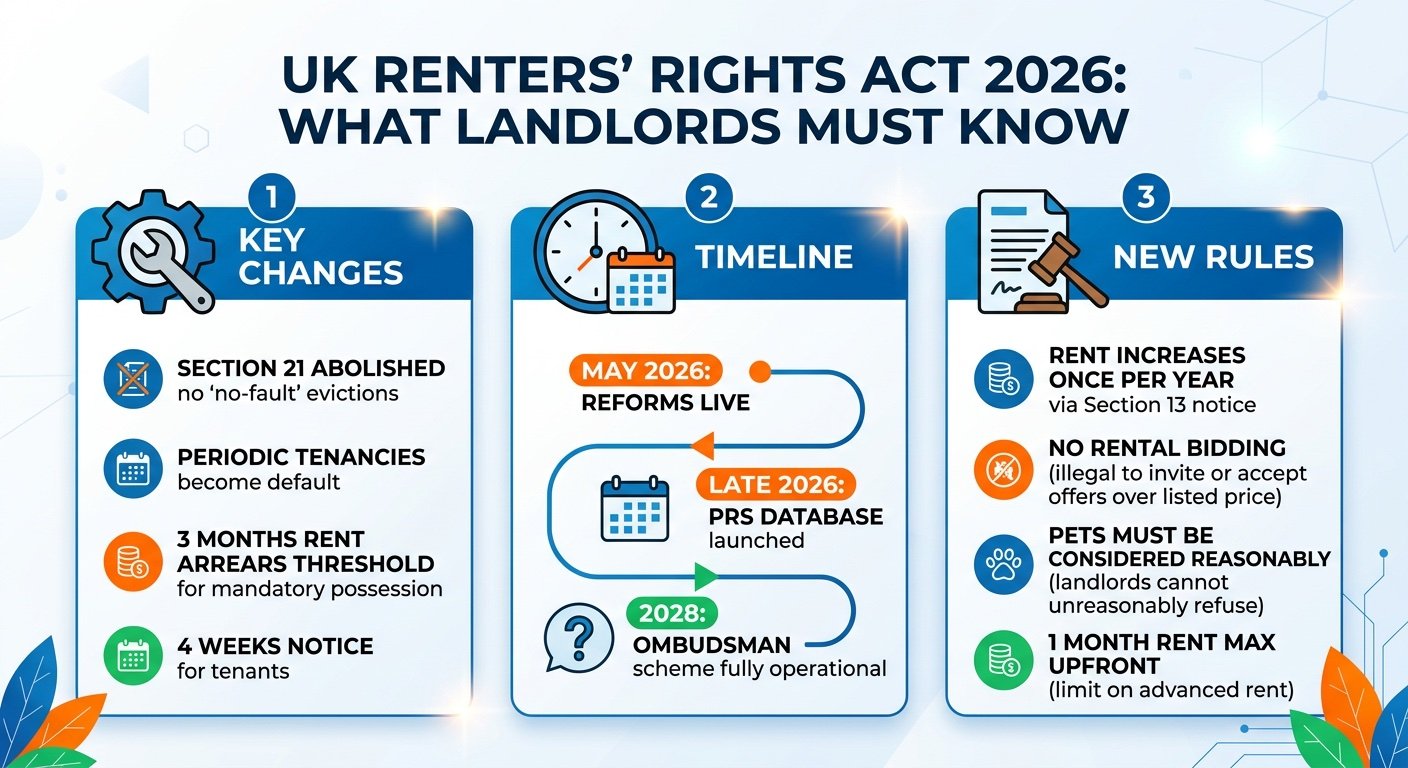
No-Fault Evictions Banned: Section 21 notices are abolished. Landlords can only evict tenants using specific, legally valid reasons (Section 8) such as rent arrears, anti-social behavior, or the intent to sell/move into the property.
Rolling Tenancies: Fixed-term contracts have been replaced with assured periodic (rolling) tenancies. Tenants can leave at any point by giving two months’ notice.
Pet Requests: Tenants now have the right to request keeping a pet, and landlords must fairly consider the request and provide reasons if they refuse.
Rental Discrimination Banned: It is illegal for landlords or letting agents to discriminate against prospective tenants who receive benefits or have children.Capped Advance Rent: Landlords cannot ask for or accept more than one month’s rent in advance once the agreement is signed.
Capped Advance Rent: Landlords cannot ask for or accept more than one month’s rent in advance once the agreement is signed.
No Bidding Wars: Advertisements must display a fixed asking price, and landlords/agents are prohibited from encouraging or accepting offers over the advertised rent.
Rent Increases: Rent can only be increased once every 12 months with a minimum of two months’ notice, and disproportionate hikes can be challenged at a tribunal.
For the latest information on renters’ rights in the UK, see the official government guidance